Tuesday, April 7, 2020

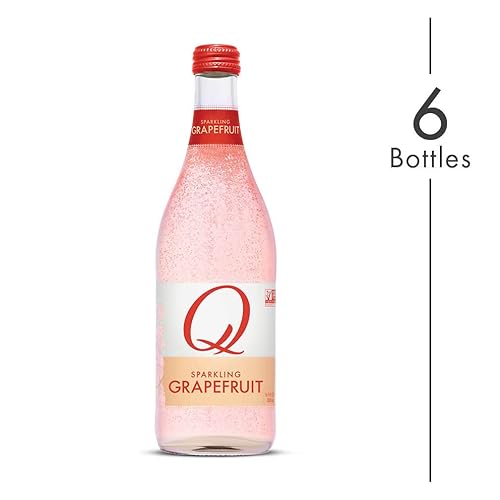
Q Mixers Grapefruit, Premium Cocktail Mixer, 500 mL (6 Bottles)

How to make a DIY tonic

Possibly you already know that everything do it yourself, do it yourself, is in fashion. The abbreviations DIY, with which this trend is abbreviated, are everywhere and there is not much effort to find instructions to do practically anything at home. By proxy you can even make a homemade gin at home.

And if you make your own gin, why not make your own homemade tonic? Taking into account that nothing needs to be distilled here, it is possibly even easier. The recipe is already circulating in American blogs and you just have to add a little value to start making it. The result, by the way, will be colored, because by not using industrial quinine it will not be transparent as it happens with the purchased tonic.

Q Mixers Grapefruit, Premium Cocktail Mixer, 500 mL (6 Bottles)

button

What do you need to make your DIY tonic? The list of ingredients is as follows:

  • 1 lemon
  • 1 lime
  • 2 cups of water
  • 2 tablespoons cinchona (also called quina: you will have to trust the internet and herbalists to get it)
  • 1 tablespoon and a quarter of citric acid powder
  • 1 lemongrass stem, which in Spanish is also known as lemongrass or lemongrass
  • 1 and a half cups of sugar
  • 6 cups of carbonated water

With all these ingredients you will be ready to make your tonic. The recipe seems laborious, but thinking about making your own tonic always has a motivating point. You have to start by grating the lemon and the lime and also extracting the juice. The grated skin and the juice will go to a saucepan with the water, cinchona, sugar, citric acid powder and lemongrass (which will have been chopped before. Bring to a boil and then leave for about 45 minutes to cook. mid fire.

When that time has passed, we will have the syrup that will be the base of the tonic. It must be strained (as many times as necessary so that there are no solid remains) and then it is left for two hours to cool. It can be kept in the fridge.

After this cooling time, it will be possible to make the tonic: you just have to mix the syrup with the carbonated water. The formula for the final result to be pleasant is one part of syrup for four of water.

But if these instructions have seemed very complicated, don't despair: you can always use the bottled tonic (or buy a pack of gin and tonic and kill two birds with one stone)


Q Mixers Grapefruit, Premium Cocktail Mixer, 500 mL (6 Bottles)

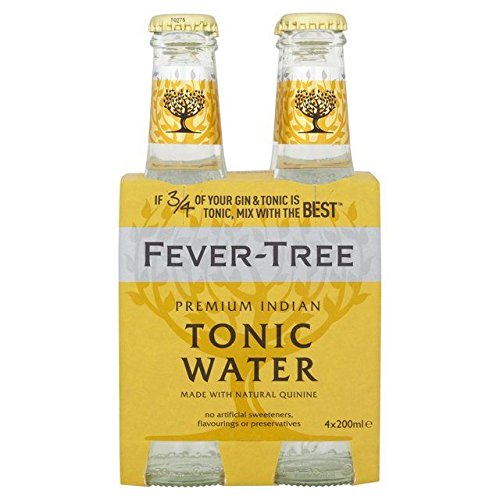
Fever-Tree Indian Tonic Water - 4 x 200ml (27.05fl oz)

How to make the perfect homemade tonic for cocktails

The tonic is one of those soft drinks that is difficult to give up when we talk about cocktails. However, not all tonics are the same and the recipe that we are going to show you today is going to delight you, especially if you like drinks that you can prepare yourself at home.

In this case we are going to show you a homemade tonic syrup with which you will be able to flavor any cocktail. The idea is to be able to make any drink with tonic using today's recipe. Of course, being concentrated, you will have to reduce the dose in half so that it works just as well.

Fever-Tree Indian Tonic Water - 4 x 200ml (27.05fl oz)

button

Ingredients:
  • 45 drops of quinine extract with lemongrass
  • 24 drops of citric acid
  • 8 drops of yuzu
  • 8 drops ginger extract
  • 8 drops of fennel

Preparation:
To make this homemade tonic we just have to mix the ingredients well until we get the final mixture to be homogeneous. When you get it, you can save this mixture to get it always ready to be used in your cocktail mixes. It is so easy to be able to take advantage of this idea that is also much more aromatic than what you can buy.

In case you want a homemade tonic with a somewhat special touch, you can add citrus touches with essential oils to the mix, or spice touches adding and then straining these from the mix. Give it imagination and create your own tonic!

As you can see, knowing the recipe and having the ingredients at hand, it is not difficult to make this homemade tonic, right? Do you dare to prepare this recipe at home? And if you want to try it without alcohol, take a look at these proposals of drinks with tonic water without alcohol.


Fever-Tree Indian Tonic Water - 4 x 200ml (27.05fl oz)

Monday, April 6, 2020

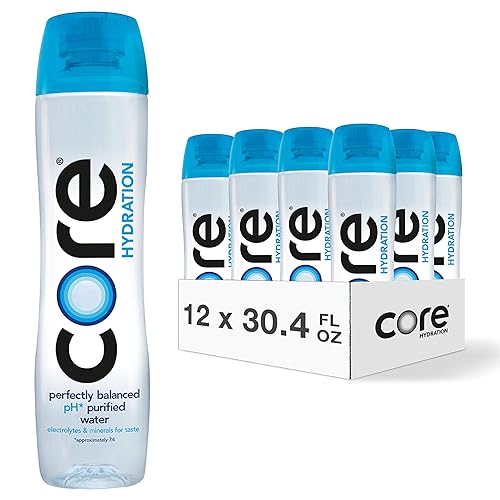
CORE Hydration, 30.4 Fl Oz (Pack of 12), Nutrient Enhanced Water, Perfect 7.4 Natural pH, Ultra-Purified With Electrolytes and Minerals, Cup Cap For Sharing

What, how and how much to drink to exercise

In the last two posts I have explained the importance of keeping muscle fuel (glycogen) tanks full for sports performance. In this new chapter I will discuss the importance of the water reserves of our body for exercise and, above all, maintaining them throughout all physical activity.

We must bear in mind that we are 60% water and, therefore, for our body to function properly it is essential to maintain it with the corresponding proportion of water. Otherwise, our vital functions may start to fail.

Athletes are especially sensitive to water loss. With physical exercise, body temperature increases and the body needs to cool down, which increases the secretion of sweat and, consequently, body water is lost. If nothing is done to compensate for this loss, the body will gradually dehydrate as the exercise progresses. The truth is that when an athlete competes in a dehydrated state he is at a disadvantage compared to another who is well hydrated. Yields less.

CORE Hydration, 30.4 Fl Oz (Pack of 12), Nutrient Enhanced Water, Perfect 7.4 Natural pH, Ultra-Purified With Electrolytes and Minerals, Cup Cap For Sharing

button
SLOWER AND CLOSER
It is enough that a person who is exercising suffers a dehydration of only 2% of the body weight for their performance to be affected. In other words, if a person weighs 75 kilos, it is enough to lose 1.4 kilos (= 1.4 liters of body fluid) to start feeling more tired, slow and clumsy, also increasing the risk of injury. In addition to affecting motor functions, the effects of dehydration also affect mental activity, negatively influencing cognitive performance: concentration status, decision making, visual acuity ... An aspect that can lead to precision errors and mistakes when deciding where or to whom to pass a ball; whether to “pass shot” or cross the ball; or stumble more than you should while doing a trail ...

And contrary to what seems, it is not so difficult to reach a state of dehydration of 2%. It is calculated that an athlete loses between 1 and 2.5 liters of sweat for each hour of intense exercise, which means losing between 1 and 2.5 kilos of weight. At Real Madrid they have calculated that the loss of liquids by sweat of their players during training is an average of 2 liters per player.

If the exercise is carried out, in addition, in serious conditions of heat and / or humidity, the losses of body fluid increase, which puts the health and even the life of the athlete at serious risk if no measures are taken in this regard. We all have in mind episodes of athletes reaching the finish line exhausted, dizzy and losing consciousness. The best known case is that of the Swiss Gaby Andersen in the Los Angeles 84 Olympic marathon, who, due to dehydration, staggered, disoriented and totally exhausted the last leg of the race.

WATER OR SPORTS DRINK?
The first dilemma that arises when hydrating for exercise is knowing whether it is more convenient to drink water or is it preferable to resort to an isotonic sports drink (osmolarity between 270 and 330). The answer is: it depends. It depends on the moment, the type of effort, intensity and the weather.

Before exercise or pre-hydration:
The most recommended is to drink water. If a balanced diet is followed, the water together with the nutrients we ingest in the meals allow us to obtain a sufficient quantity of electrolytes. In the event that the exercise is going to be very long and carried out in hot / humid conditions, it is beneficial to add a little more salt to the food or to take a salty snack (cookies, almonds ...) since its sodium content helps to retain liquids. You can also choose to drink water with salts.

During exercise
In sessions of up to 60 minutes in duration and / or low intensity (Pilates, Yoga, low impact gym sessions ...) it is enough to drink only water. In sessions that last more than 60 minutes or somewhat shorter (45 ’) but are very intense, you can use an isotonic sports drink that contains 6-8 gr / 100 ml of carbohydrates and electrolytes, including sodium. The contribution of carbohydrates allows to replace muscle glycogen.

Isotonic sports drinks with carbohydrates of 6-8 gr / 100 ml are very beneficial during the rest times of collective sports games (soccer, rugby, basketball, volleyball, ...) since they help to replenish muscle glycogen and face in better condition the second part. It is also useful to take them during, for example, a tennis match especially if it is prolonged.

Isotonic sports drinks that are marketed for this purpose usually have practically all of these carbohydrate concentrations, although some remain somewhat shorter and do not reach 6%. To know for sure, just look at the Nutritional Information for 100 ml of the drink and see the specified grams of carbohydrates or% of total sugars.

After exercise or re-hydration
In short and / or light sessions, water is sufficient. If the exercise has been intense and / or long-lasting, it is a good option to resort to an isotonic sports drink with minerals (sodium and potassium) and also carbohydrates in order to replace muscle glycogen. There is also the option to drink only water and accompany it with a Repairing Snack.

In the case of undergoing a weight loss process, it is not a good remedy to use a carbohydrate drink because of its caloric intake, but if you have sweated a lot during the session, it is a good measure to drink water with mineral salts .

In order to achieve rapid rehydration, it is also useful to have a salty snack (almonds, chips, cookies ...). The fact of recommending sports drinks is also due to the fact that, since they are more palatable than tasteless water, they are a greater motivation for athletes - especially if they are children or young adolescents - hydrate themselves adequately when conditions demand it.

HYDRATION GUIDELINES
Before exercise or pre-hydration:
During the 4 hours before the effort, it is recommended to drink in the order of 5-7 ml / kg (between 350 to 650 ml = 2 to 3 glasses of water). This intake, which should not be done suddenly but in a distributed manner, can also be done during the two hours before starting to train, in the order of 3-5 ml / kg (1 to 2 glasses of water).

During exercise:
If it lasts more than 60 minutes, it is recommended to drink between 150 ml to 200 ml (one glass) every 20 minutes. But if the conditions of heat and humidity are severe, in a long-term test, the needs can increase to 400 ml. The goal is to compensate for sweat losses and finish the exercise with the least possible loss of body fluid. In the rest periods of soccer, basketball, handball, and rugby matches, among others, it is recommended to drink 400 to 500 ml.

After exercise or re-hydration:
It is advisable to drink a volume of liquid equal to 1.2 or 1.5 times the weight lost during exercise. That is, if the weight lost is 1 kg, it is advisable to drink 1.5 liters of water or sports drink. Loss of body fluid is identified by weighing before and after exertion.

DO NOT DRINK IN EXCESS
As in everything, exceeding in hydration is also not convenient due to the risk of suffering hyponatremia, a disorder that occurs when blood sodium concentrations drop abnormally for the proper functioning of the nervous system. It manifests with dizziness, confusion, muscle weakness and in severe situations can cause seizures and even coma.

The hyponatremia that occurs in athletes is usually due to drinking more fluid than was lost in sweat, although it can also occur in athletes already dehydrated, as a result of large sodium losses due to sweat.

Among those who are at higher risk of suffering are the so-called "Salty Sweaters", people with high rates of sweating and / or subjected to high sodium losses. This is why it is important that beverages contain sodium.


CORE Hydration, 30.4 Fl Oz (Pack of 12), Nutrient Enhanced Water, Perfect 7.4 Natural pH, Ultra-Purified With Electrolytes and Minerals, Cup Cap For Sharing


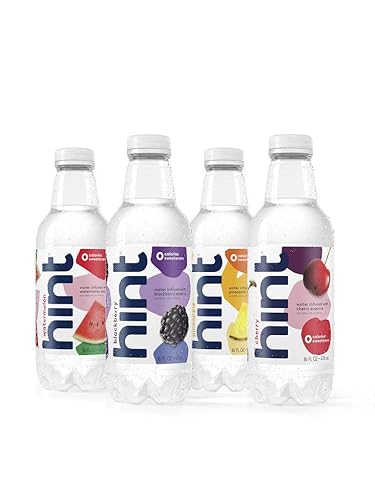
Hint Fruit Infused Water, Variety Pack, Cherry, Watermelon, Pineapple, Blackberry, 16 oz (12 Pack)
How to make a homemade sports drink and what to understand about hydration in sports?

In the ranking of importance for sports health and performance, hydration is bidding for the top positions, and is largely forgotten. Therefore, here I present a recipe for homemade sports drink, but before a brief explanation of the physiology of hydration-dehydration.

Hint Fruit Infused Water, Variety Pack, Cherry, Watermelon, Pineapple, Blackberry, 16 oz (12 Pack)

button

Understanding hydration in sports
The recommendations on how the athlete should hydrate has been greatly modified. Since the 1970 New York Marathon, where scientists discussed the role of hydration in sport and recommended consuming as little as possible, until today that "if you lose X amount of body weight, the race ends in the hospital", there is a pretty big jump. The recommendations of the amount of liquid to eat in the athlete's diet will continue to change, so we must base ourselves on what is proven and not be guided by the head of marketing.

The human body has a certain percentage of water, which will depend on the type of tissue and the age of the person. Always, the body will react to the different changes in hydration to maintain it as long as possible through different systems such as Renin-Angiotensin-Aldosterone, which will stimulate or not the reabsorption of water and sodium at the renal level, which produces the feeling thirsty The balanced state of hydration that the body tries to reach is known as euhydration.

Today, there are different recommendations to find out how much liquid a person should consume while active. The simplest and most effective way is to know the rate / hour of lost liquid:

  • You must weigh yourself before the training or event,
  • Carry out the training and count how many minutes were
  • Go back to weigh yourself.
  • Calculate the difference in weights and divide it by the number of minutes
  • Using a simple rule of 3, calculate the rate at one hour.
  • In this way we are knowing for your body, for that activity, at that temperature and relative humidity of the environment, how much liquid it loses. This can (and should) be done in different conditions, activities, and climates to estimate what your rate of sweat and lost fluid is. Do not forget that if you drank some liquid during the activity, this should be added to the final equation, in exactly the same way, weight before and after and by difference, it is what was taken.

It is easy, but if you get bad with the numbers or want to do these calculations automatically, in the Basic Kit there is a spreadsheet to calculate dehydration as a free tool.

For the large mass of people, this calculation is sufficient, doing it repeatedly and in different conditions will give us a good parameter of how you should hydrate. But if you are one of those who like to have everything exactly calculated, this calculation has some errors that can easily be eliminated. For example, as we know what your exact weight is, being that if you train in the morning you will have one weight, and if you train in the afternoon you will have another; one hot day you will have a weight, one cold day you will have another.

To eliminate this error and be able to know your exact weight (as much as possible), we must evaluate the weight periodically when you get up, after at least 7 measurements we can average weight, and thus we would be getting a little closer to your exact weight.

There are more precise options that can be done before training. With a urine specific gravity meter, you can assess how you feel before or after training.

Normal levels: 1002 - 1028
> 1028 there is already talk of a dehydrated person.
In addition to the state of euhydration when starting with a training or competition and the weight lost due to perspiration, there are other variables in an activity weight loss equation that are less important but should be taken into account if possible. I am not going to extend beyond naming them, because each variable deserves an entire post, and this one is about drinks.

Loss due to breathing Height, weight, Acclimatization or number of days in the heat (important for athletes who travel to places with different climates) Wind, radiation, relative humidity. Clothing characteristics (thermal resistance, evaporation potential, etc.) Activity rate (metabolic heat production, external work)
For all the above, it is very difficult to make a general recommendation for all people, for all climates, for all levels of athletes regardless of height, weight, condition, adaptation to the heat, and several etc.

Sport drinks. Energy, the key point (?)
Sports drinks ended up being (for many) an elixir that can be used under any condition, circumstance, it does not matter. However, these drinks have key points to understand. What is the importance of carbohydrates, what is the importance of electrolytes, what is isotonic, etc.

The optimization percentage of carbohydrates should be close to 6% (between 4% and 8%), in this way, we ensure that there is a rapid gastric emptying, obtaining energy quickly (when we need it). This is why when making a homemade drink, the inclusion of carbohydrates should not exceed 8 grams per liter of water.

Until very recently, it was thought that, physiologically, the human being was not able to digest more than one gram of glucose per minute, which put us at the mercy of 60 gr per hour, which meant 240 kcal per hour.

In a recent research carried out by Jeakendrup et al, indicates that the absorption and oxidation rate of carbohydrates can be increased using different sources, this is because the absorption rate of carbohydrates is limited to specific and different transporters. Therefore, the carbohydrate consumption limit has been increased to 90gr / h using two components; To be able to do it exactly, it must be added in a ratio of 3/1 of glucose and fructose respectively, and fructose should not exceed 33% of total sugars due to gastrointestinal complaints.

Also be very clear that this must be trained. If you are not used to training with carbohydrates, do not try to do it in a competition.

How to energize your drink?

Now that we know how to think about our sports drink, let's see how we best fill the bottle according to opportunities and tastes.

Common sugar or table sugar: It is sucrose (glucose + fructose). It is the cheapest way. (It has as detractors those people who demonize sugar but do not know that sports drinks have it) Honey: It will depend on the type of honey, but the typical content is 38% fructose and 31% glucose (+ other sugars). Its use in drinks makes it very appetizing, but its use should not be abused due to the fructose content, as I explained above. Agave syrup: with its followers and detractors, to obtain this product it must undergo a process with a series of chemical reactions. Normally it has 70% fructose, although highly processed ones can become 100% fructose. HFCS (High Fructose Corn Syrup): Product generated to not be so dependent on cane sugar from tropical countries. Contains 55% fructose. Its use is also very controversial. Raspadura or panela: it presents glucose, fructose, proteins, minerals and vitamins. Cold panela water is a drink used as a natural moisturizer, well known and used especially in Colombia. Contains 80% sucrose.

What NOT to put in your drink? (if you want it to offer you energy and quick hydration)
As I explained before, if the idea is to obtain energy more quickly (depends on the sport and / or strategy), logically we will avoid everything that slows gastric emptying, but I insist that you have to know what you want and what the idea is, for this it is good to understand:

Proteins: Placing proteins in your bottle would be wrong if the goal is better hydration, since gastric emptying will be slower. It would be different if it is a drink for post-exercise recovery in which the inclusion of proteins can be beneficial. Fiber or seeds: Adding seeds such as chia, flax, and poppy give it a different texture and flavor to the drink, especially due to the gelatinous flavor, something that is really worth trying. In particular, I like it a lot and it feels very good, but it was necessary to evaluate well whether it is important to place them or not. With the fiber, gastric emptying will be considerably slower. Fats: Although it slows gastric emptying, it provides a large amount of kcal. Although in a very slow way (carbohydrates do it quickly). Also, trying to drink fatty substances while competing is something that can send you straight to the bathroom, believe me.
Why are they isotonic?
Short and short, explaining osmolarity can take a good number of words, so I try to summarize it.

An isotonic medium or solution is one in which the concentration of solute is the same inside and outside the cell, therefore they have the same osmotic pressure as blood. It is one of the main characteristics to take into account in the relationships of the liquids that make up the internal environment of living beings, since the plasma membrane of the cell regulates the entry and exit of solute into the extracellular environment that surrounds it, acting as a control barrier.

Osmosis is of great importance in living things. The cells of the organisms are surrounded by aqueous fluids, such as blood, lymph, or sap, which contain concentrations of different solutes. Cell membranes are permeable to water, oxygen, nitrogen, carbon dioxide, and other small organic molecules, such as glucose or amino acids, while they are impervious to polymeric molecules, such as proteins and polysaccharides. Instead, inorganic ions and disaccharides, like sucrose, pass very slowly through cell membranes.

For this the carbohydrates must be in the percentage described so that the drink does not become hypertonic and hinders absorption.

To make Crazy Juice, cheaper, richer and you make sure it has the best for your performance:
I must clarify that the name “Jugo Loco” was born as a joke with some friends in Barcelona, ​​it is not much more than the homemade preparation of a drink that helps better sports performance, like any other of the big companies.

Glucose and fructose mix (you can also use maltodextrin instead of glucose): 50gr in each liter of water. Lime, lemon or orange juice: 150 cc. Baking soda: 1.5 gr (the tip of a tablespoon, or a blister of berriespirin)
In this way we get an isotonic homemade drink, 6-7% carbohydrates, with 0.6 grams of sodium per liter and the taste you want.

"The sodium in the drink I promise that I will dedicate a separate post."

Extra points:
Our digestion of carbohydrates begins in the mouth (not the same for other macronutrients) through salivary amylase or ptyaline. Therefore, keeping a drink with carbohydrates in the mouth, or making mouthfuls with it, will already be giving us part of that energy, using this advantage can help us for some sports or situations where you do not want to fill your stomach with liquid due to discomfort, but harness some energy from carbohydrates. In some sports it has been done for a long time, in others such as soccer, it was only at the last World Cup in Russia 2018 that it was seen (or at least more attention was paid to how the players swirled) The temperature of the liquid influences the capacity absorption. Temperatures below 10 ° C will slow down absorption (Jeakendrup, 2011). If the temperature exceeds 20 ° they will not be appetizing. Rule: the greater the need for hydration, the lower the concentration of carbohydrates and the greater the concentration of mineral salts, thus avoiding hyponatremia. This type of drink becomes increasingly important as physical exercise moves away from the first hour. However, in training or minor competitions per hour, it is also useful to swish and not consume much more liquid than we spend.


Hint Fruit Infused Water, Variety Pack, Cherry, Watermelon, Pineapple, Blackberry, 16 oz (12 Pack)
Sunday, April 5, 2020

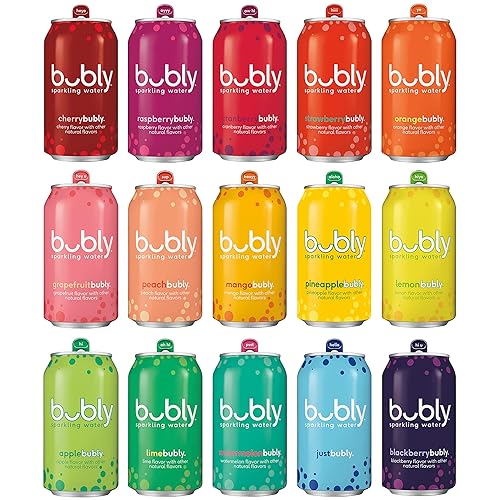
Bubly Sparkling Water, 15 Flavor Sampler, 12 fl oz Cans, (18 Pack)

Best tips for serving and tasting your sparkling wine

With the days of higher temperatures and the end of the year coming, the sparkling wine is a drink that gains more and more space on the Brazilian table.

Although it seems relatively easy to taste, some specific precautions when serving and consuming the drink can help you improve the experience - especially if you have a good label on hand.

Bubly Sparkling Water, 15 Flavor Sampler, 12 fl oz Cans, (18 Pack)

button

How about checking out these tips to serve and taste your sparkling wine?

serve sparkling wine - 1

Choose the right cup
The first care you must take to serve and taste your sparkling wine is to choose the right glass to serve.

The ideal glass for sparkling wine is the flute type, or flute, which is more elongated and with a narrow mouth. This format helps not only to preserve the bubbles produced by this drink, but also to enhance its flavor and aroma.

Remember that the stem must be large enough for you to hold the bowl there, avoiding heating the drink.

The sparkling wine was not made to shake before serving
As much as sparkling wine is a festive drink, it is very wrong to shake the bottle before opening and serving it to your guests. Believe me, you get the same feeling of celebration by opening this bottle with caution!

By shaking the bottle, in addition to losing almost half of the liquid that goes out there, you also impair the concentration of bubbles and the taste of the drink. This greatly influences the experience you will have when consuming it.

Be very careful when opening
The first tip to open the sparkling wine in the correct way is to wait to open it. Give her time as soon as she arrives from shopping or right after using transportation to get somewhere. The movement of the vehicle that was used to transport the drink can leave its interior agitated, with great risks of popping the cork before it even opens. So, let her rest.

A few hours later, prepare to open the bottle taking the following precautions:

  • Do not point the bottle at people, glass cases or plaster ceilings;
  • Hold the bottle with one hand and the cork with the other;
  • Rotate the bottle slowly (never the cork!) Until the cork comes loose;
  • Use thumbs and other fingers to help release the pressure.

Set the temperature to serve
A good sparkling wine is served at low temperatures, which vary between 6 ° C and 8 ° C. For more complex labels with more body it is worth investing in increasing the temperature a little. Therefore, serve between 9 ° C and 13 ° C.

It is also worth remembering that, once opened, the sparkling wine must be served quickly. Even when putting it in the bowl, serve at once, avoiding filling it gradually. If necessary, serve in two stages, adding a little to fill the bottom, wait for the foam to descend and serve the rest.

Ice is not a prohibited territory for some labels

Putting ice in a glass of wine or sparkling wine can be awkward for many people. However, some specific types of sparkling wine can combine with this technique. It has even become a trend in Europe in the summer.

To take your sparkling wine with ice, prefer those with a more intense flavor to prevent the drink from getting too watery.

Get the harmonies right
In order to enjoy all the characteristics of a good sparkling wine, in addition to serving it in the right way and at the right temperature, it is necessary to know how to harmonize it with the ideal dishes:

  • A good brut sparkling wine is very versatile and can be combined with dishes ranging from salad to lighter red meats;
  • The extra brut, which are even drier, go well with acidic or fatty dishes, such as salads, lobsters, oysters, ceviches and pasta with white sauce;
  • The dry sparkling wine is excellent to start the evening and accompany snacks and appetizers;
  • Demi-sec goes well with both seafood and desserts, as they are slightly sweet;
  • Sweet sparkling wines must accompany fruits, sweet fondues, chocolates, panettone and other variations of desserts and sweet dishes.


Bubly Sparkling Water, 15 Flavor Sampler, 12 fl oz Cans, (18 Pack)

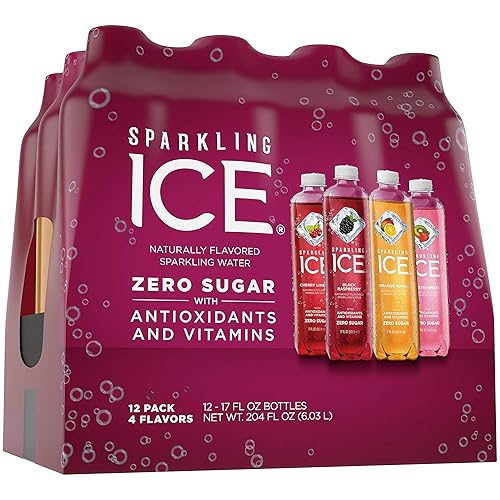
Sparkling Ice Variety Pack, 17 Fl. Oz (Pack of 12) - Packaging May Vary

Practical tips for drinking sparkling wine

Sparkling wine is a wild drink. It combines with different occasions - with the beach, with a more elaborate dinner or with a happy hour with friends. In addition to being flexible when it comes to harmonization.

Sparkling Ice Variety Pack, 17 Fl. Oz (Pack of 12) - Packaging May Vary

button

The best way to find your favorite sparkling style is to try it. We talked with MaurĂ­cio Roloff, from the Brazilian Wine Institute (Ibravin), about the ABC of sparkling wines and separated some tips for those who are improving the palate.

First, open the bottle
The easiest way is to hold the bottle with both hands, placing one on the cork and the other on the base of the bottle. The easiest thing is to twist the bottle, not the cork. So you need to use less strength in the task. Leave to twist the cork only at the end, when it is almost out, to control the noise of the popping. The formal etiquette asks for the opening of a sparkling wine to happen without making a noise, or as little as possible, and would also say not to shake the bottle. The important thing is to guarantee a good experience, and a little noise attracts attention and invites people to share a toast, so it’s not all bad.

The best sparkling wine is the one you like
Pay attention mainly to categories of sweetness (dry / medium-dry / sweet), preparation method (Charmat / Traditional / Moscatel) and price (the one that fits in your pocket). By identifying your favorite parameters, it becomes easier to make the right choice. When in doubt, write down the labels you liked best.

Always drink ice cream

The lighter the sparkling wine, the colder it must be. To set the temperature (ideally between 6 ° C and 10 ° C), use an ice bucket or ice bag to cool the bottles (see our accessory hotlist here). Place the sparkling wine on a lot of ice and a little water (until it covers the label) inside the container for 20 minutes before serving.

Refrigerator only as a last resort

The refrigerator is not wine-friendly. The temperature is irregular, there is chatter and the aroma of the food can impregnate the bottle or the cork and disrupt the tasting. Also avoid using the freezer, as it can freeze the cork.

Store the sparkling wine in a cool place

The rules for preserving are the same as for a wine: the bottles must be kept in an airy place, with a cool and constant temperature (around 15 ° C is ideal), without incidence of light. Most of the sparkling wines available on the market are made to be drunk soon, so only stock bottles at home if you are in the habit of tasting often or are already planning to consume.

Bottle lying or standing?

It is best to leave the bottle lying down, so the cork is always in contact with the drink, with less risk of the cork drying out and allowing air to enter the bottle. But this rule applies mainly to bottles that will remain stored for a long time, which is not the case for most sparkling wines.

The cup makes all the difference

There are bowls that favor the expression of perlage (as we call the formation of bubbles in the bowl - you can already write that term down). Others, not so much. In general, crystal glasses are best for more specialized tasting. Glass pieces are not a problem, as long as they are transparent. Colored goblets are good only in relaxed situations, where there is no intention to seriously analyze what you are drinking. And one of the latest fashions in the sector are colored acrylic bowls. They allow a very informal tasting, ideal for situations such as the beach or pool, picnics and meetings with friends.

There was sparkling wine left in the bottle, now what?
Sparkling wines are more difficult to maintain with quality after opening than other wines, basically due to the rapid loss of gas in the bottles after opening. There are some special caps that seal the neck to hold the bubbles (perlage), but they do not guarantee a very long survival. The maximum storage time after opening is from one day to the next. This does not mean that what is left should go down the drain. The rest of the bottle can be used to replace white wines in recipes.

And if you still don't know where to start, we've separated a list with 15 labels to get to know Brazilian sparkling wines.


Sparkling Ice Variety Pack, 17 Fl. Oz (Pack of 12) - Packaging May Vary

Saturday, April 4, 2020

Boscoli Dirty Martini Olive Juice 12.7 ounces (Pack of 3)

Martini cocktail

The martini or dry martini (Dry Martini in English) is one of the best-known cocktails, made up of gin with a jet of vermouth. It is usually served in a cocktail glass, garnished with a crossed olive. There are numerous variants of the martini, although perhaps the best known is the Vodka martini, in which the gin is replaced by vodka.

Boscoli Dirty Martini Olive Juice 12.7 ounces (Pack of 3)

button

Preparation
According to the IBA (International Bartenders Association), 2 the martini recipe consists of:

  • 5.5 cl of gin (or vodka in the case of Vodka martini)
  • 1.5 cl of dry vermouth
  • The ingredients are added in a mixing glass with ice cubes, and should be stirred well. It is served without ice, in a chilled cocktail glass, squeezing the oil from the skin of a lemon or garnished with a cross olive.

Variations
In addition to the Vodka Martini, there are several variations of the recipe, such as the sweet Martini, in which the dry vermouth is replaced by red vermouth and decorated with a maraschino cherry; 3 or the Perfect Martini (perfect Martini), composed of 5.5 cl of gin, 1.0 cl of dry vermouth and 1.0 cl of red vermouth, decorated with lemon peel or a maraschino cherry. 4 Also the Gibson, a martini served with one or two pearl onions instead of the classic olive.

Another notable variation is the one known as Clarito, created by the famous Argentine bartender Santiago Policastro, in which the olive is replaced by a lemon peel garnish, which gives the drink a slightly milder flavor.

History
The Martini appears to have been created around 1910. Its name could derive from Mr. Martini, bar chief of the New York Knickerbocker Club room in the first decade of the 20th century. Another theory relates it to a Mr. Martinez, who was able to invent the cocktail in a Boston bar in the late 19th century. It can also derive from the vermouth brand Martini & Rossi, which exported their products to the United States long before the cocktail existed.

There are numerous anecdotes or legends related to the Martini. When the American Dry Act was repealed, newly elected President Franklin Delano Roosevelt prepared a dry Martini at the White House to make the mandate official; 6 years later, at the 1943 Tehran Conference, Roosevelt himself prepared a Martini for Stalin. , who opined that it "cools the stomach more than anything else", a opinion denied by his successor, Nikita Khrushchev, who after drinking an especially strong one said that it was "the most lethal of American weapons."

There are also several theories and legends about the exact proportions of the Martini. British Prime Minister Winston Churchill is said to have been known to prefer a dry Martini to the one that was "shown," without adding vermouth. Ernest Hemingway is also said to have liked a high ratio of gin (15 to 1), rather than the classic mix (8 to 2) .

The discussion about the way the Martini is prepared is also well-known, represented in popular culture in the figure of James Bond, the character of the English novelist Ian Fleming, who in all his films, when he asks for his favorite drink, adds: «agitated, not stirred », which is strictly called a" Bradford ". W. Somerset Maugham stated on the other hand that "a Martini must always be stirred, not shaken, so that the molecules rest sensually on top of each other." The difference between mixing or shaking the cocktail is really indistinguishable, and the choice of one or the other method lies in the belief that, in some way, the drink is affected by the way of preparation.

Its popularity is such that it has given its name to the most universal cocktail glass, triangular in shape, which is called a martini or cocktail glass.


Boscoli Dirty Martini Olive Juice 12.7 ounces (Pack of 3)