6 steps to successful tree cutting

1. Plan ahead
Preparation is very important when cutting wood with a chainsaw. If you plan to overturn and what kind of forestry equipment you will bring, not only will you create a safer working environment, but you will also ease the post-overturning work. First, determine if there are large obstacles in the work area, such as power lines, roads or buildings. Hang warning signs if you know that a road or people have passed through the work area.
2. Check the direction of fall
Examine the tree to determine the tipping direction. How do the branches look and grow? Also consider the wind direction. If you are not sure about the natural tipping direction of the tree, move away from the tree and check it with a plumb (see the information box for details). Clean the area around the desired tip direction. Also, clear the 45-degree area behind the tree to create an escape space for yourself.
3. Trim the body
After clearing the area, hang the warning signs and determine the tipping direction and direction of escape. Check if there is enough fuel for your job. Then prun the branches and knots that you may encounter when making the tilting cut. The safest way to pruning is to work with the pull chain (bottom of the guide) from the top to the bottom.
4. Determine the cutting technique
Tilting is done after the tree is cleared from the knots up to the shoulder level. The joint must have the correct dimensions and equal thickness, and a tilting wedge or crushing guide must be placed before the tree is assembled on the guide. Which technique you use depends on the tree size, the slope, and the size of your saw. We have compiled information on different techniques so that you can see which method is right for you, depending on your situation. / Add link to "working with saws" section /
5. Check for broken parts
You should be very careful if you notice that the lumber is fading or soft, or if the underside of the trunk appears swollen or distorted. This indicates that the tree is rotten and the wood fibers are weak. When this happens, tip the tree to its natural tipping direction and use a crane if unsure. Decay is usually reduced to the top of the tree, so you can choose to overturn the tree with an additional height.
6. Select your tool
There are various tilting tools that you can select when tapping a tree. The size of the tree will determine the type of forestry equipment you need. You do not need forestry equipment for the smallest trees. In addition to the hand force, a long pile will suffice. The tipping wedge provides a greater tipping force compared to different breaking guides. You can use a rope and winch in harsh conditions; this is the safest and most powerful tipping method. For more information about the different tools, see the information box.
1AXX
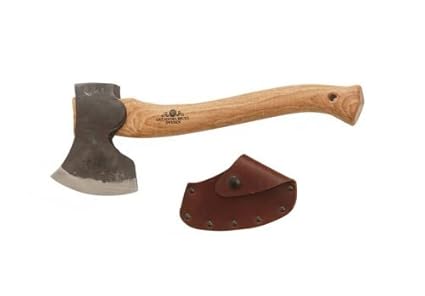
Gransfors Bruks, Large Swedish Carving Axe
