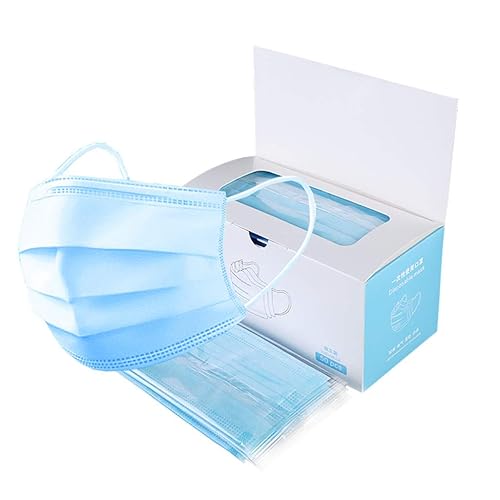
Around the world there are people who buy protective masks with the hope of keeping the new virus detected in China at bay. Some companies demand them from their employees. South Korean schools ordered parents to equip their children with masks and hand sanitizer when they return from winter break. In China, they fined a chain of pharmacies for multiplying the price of this product against the incessant demand.
But do the masks work? It depends.
All viruses are small enough to go through the classic medical mask that fits with a rubber band. But usually, germs don't spread through the air one at a time, said Dr. Mark Denison of the Vanderbilt University Medical Center in Nashville. Denison studies SARS and MERS, which are coronaviruses, the same family to which the new virus belongs.
Instead, viruses pass from one person to another in small droplets expelled when coughing or sneezing . These drops fall on hands or on other surfaces, where others touch them before putting their hand to their eyes, nose or mouth.
Masks can block large drops of a cough or sneeze , which gives them some value, Denison said.
The scarcity of masks in China forces to resume work activity at the usual levels and ask foreign producers for priority (Reuters)
In addition, a person with a mask cannot touch his nose and mouth. That can prevent the user from getting germs that someone sick has left on other surfaces, he said.
Masks are " a very sensible precaution " while scientists work to determine how exactly the new virus is spread, said Oxford University researcher Trudie Lang.
However, none of this is based on serious research . No one has compared groups of people with and without masks exposing them to the new virus, Denison said. A 2017 analysis of several studies in health personnel indicated that the masks gave some protection against SARS, although the authors pointed out that " the existing evidence is scarce and the findings are inconsistent ."
The right prevention
The best way to avoid getting the new virus is to wash your hands with soap and water . If soap and water are not available, use an alcohol-based hand sanitizer. It is the same advice as to avoid the common cold and flu.
The American Centers for Disease Control and Prevention (CDC) recommends masks for people who are being checked for the new virus, confirmed patients, people they live with and those with whom they live. They attend them . The CDC recommends that airline staff offer masks to sick travelers.
The CDC also advises that health workers who care for patients with the new virus take extra precautions such as goggles or rigid masks that protect the entire face.
UNICEF said Wednesday that it had sent six metric tons of respiratory masks and protective suits to health workers to China.
In Tokyo, the hotel employee Hasumi Tsuchida, 21, said she is wearing a mask. "I work in a hotel where many guests are from China," he said. "I worry a little when foreign guests arrive."
In some countries it is common for a person to wear a mask if they are sick, suffer an allergy outbreak or on days where the contamination is especially high. The new virus has triggered the demand for masks worldwide.
Very high demand
Respilon, a Czech company that manufactures its “nanofiber” masks in China, sold 700,000 last year worldwide. Since last week he has received orders for another 7 million . The problem is that it cannot manufacture them because the Chinese government extended the holidays of the Lunar New Year in an attempt to contain the spread of the virus.
In Taiwan, where celebrations are over, factories are underway. The government has already distributed 23 million masks, Prime Minister Su Tseng-chang said, claiming the country could produce another 4 million units a day.
A mask factory in Shanghai worked at full capacity despite the holidays.
" Now we work 24 hours, 2 shifts a day, 12-hour shifts, " said Liao Huolin, president of the company. "We have broken the labor legislation ... but the workers understand it."
